Skip to Content Skip to Footer
West Virgins WIC logo
West Virgina Wic logo
  • Home
  • Ellyn Satter
    • Ellyn Satter
      Prenatal / Postpartum
    • Ellyn Satter
      Newborn / Infant
    • Ellyn Satter
      Older Baby / Almost Toddler
    • Ellyn Satter
      Toddler / Preschooler
  • Eat. Grow. Live Healthy
    • Eat. Grow. Live Healthy
      Women
    • Eat. Grow. Live Healthy
      Infants
    • Eat. Grow. Live Healthy
      Children
    • Eat. Grow. Live Healthy
      Fathers
  • Español

1 TO 1½ YEARS

  • Home
  • Eat·Grow·Live Healthy
  • Children
  • 1 – 1.5 Year Old
  • Introduction
  • Breakfast
  • Lunch
  • Snacks
  • Dinner
  • Daily Suggested Food Group Amounts
  • Look What I Can Do!
  • Keep Me Safe and Healthy

I’M READY TO LEARN HOW TO EAT MOST OF THE FOODS YOU DO.

I need your help to learn how to be a good eater and DO IT BY MYSELF!
WHAT
  • Offer small servings of several foods that are easy for me to eat.
  • I need soft, tender, and moist foods like cooked vegetables and soft fruits.
  • I still love to come to the breast to breastfeed but expressed breast milk in a cup is great too!
  • I no longer need infant formula. Please give me 16-24 ounces of whole milk in a cup each day.
  • I can drink 100% fruit juice but I like soft fruits better. Limit to no more than four ounces of juice in a day and dilute with water.
How
  • Offer me foods from a small plate or bowl.
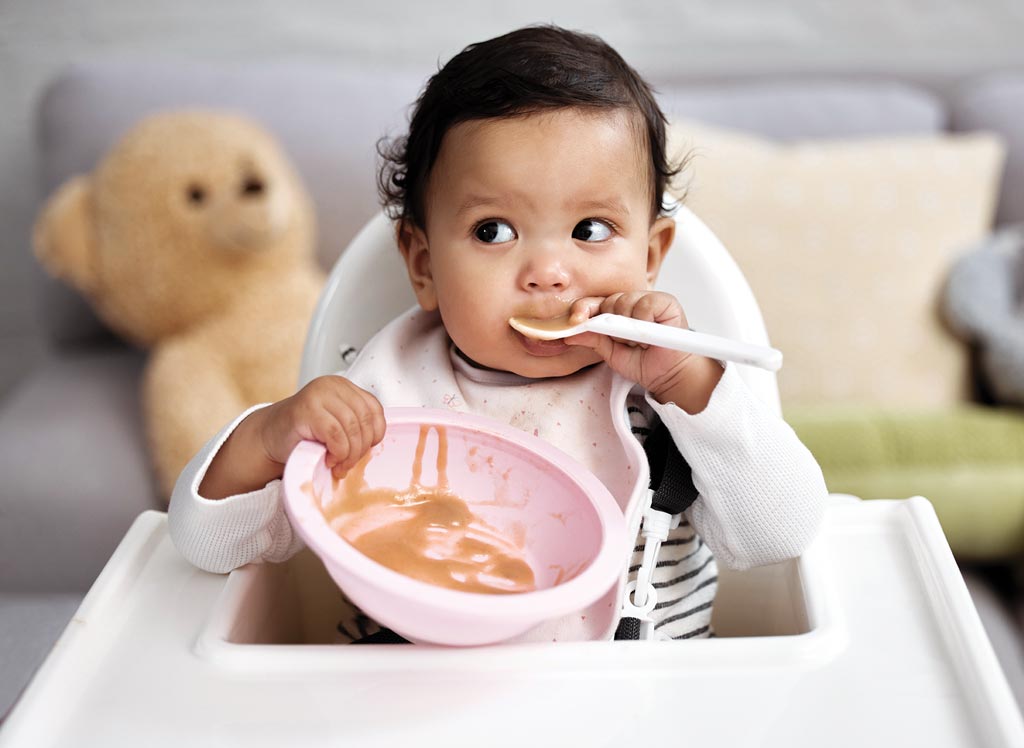
  • I want to choose if I use my fingers or my spoon. Please be patient if I am messy.
  • Cut my food into small, bite-sized pieces no bigger than your thumbnail.
When
  • I do best with 3 meals (breakfast, lunch, dinner) and 2 or 3 snacks. Let’s eat at the same times every day.
  • I only need water between meals and snacks. This way I will be hungry – but not too hungry – when it is time for the next meal or snack.
WHERE
  • Eat with me. I need your help and I learn a lot during family meals. Our time together is special. I feel so loved when you pay attention to me.
  • Let me eat at the table with everyone else. I need to be safe, sitting up, supported, and buckled in a highchair.

Let me decide which and how much of the foods you offer. Please don’t force me to eat more or less than I want.

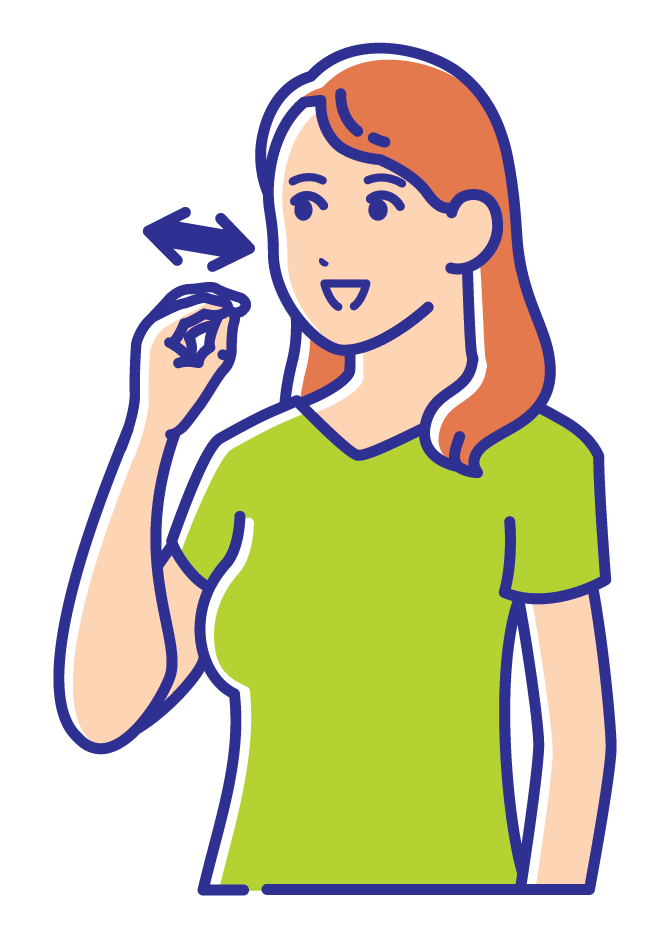
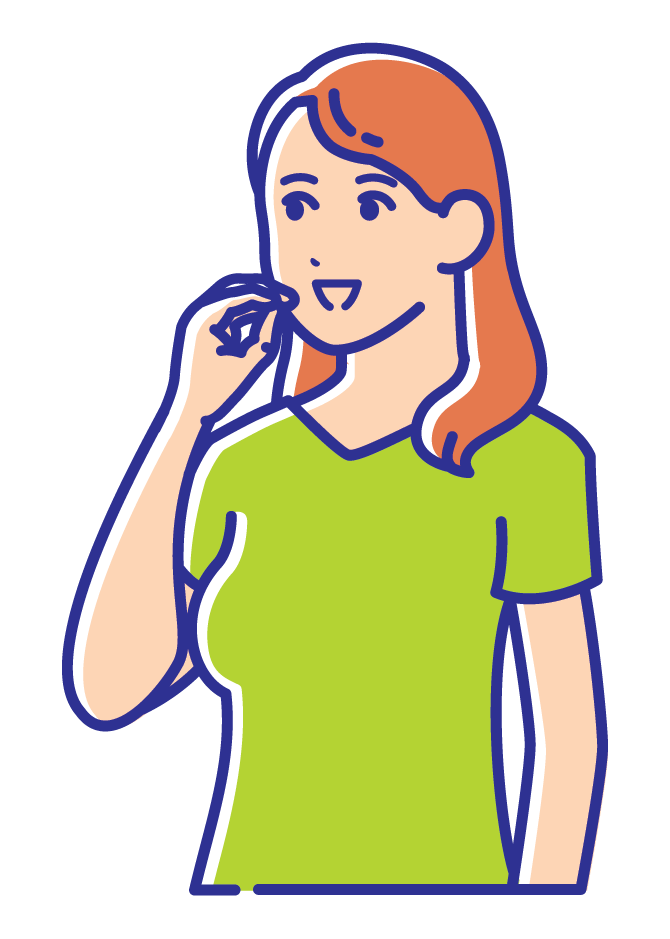
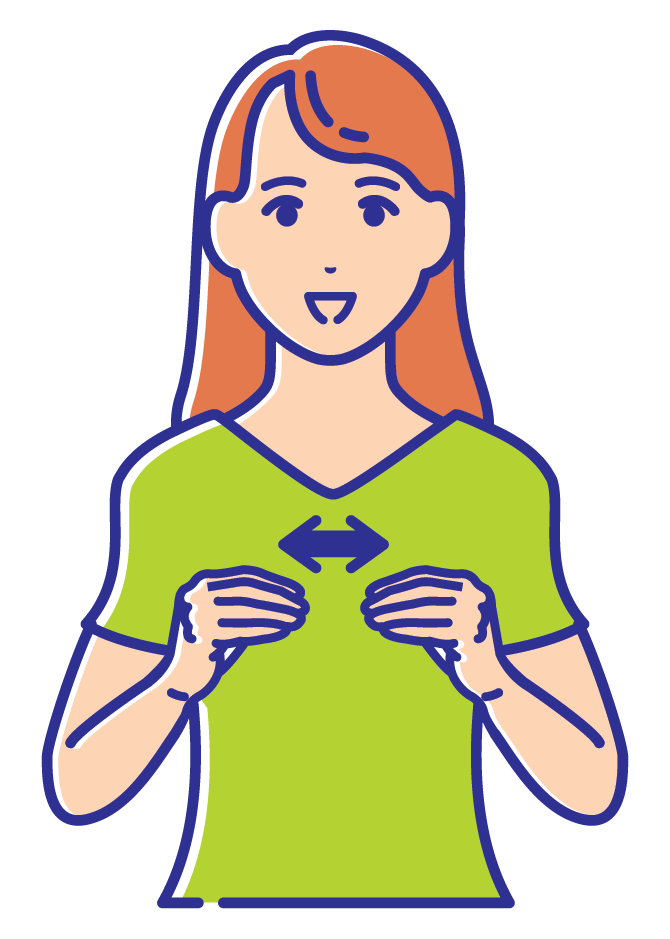
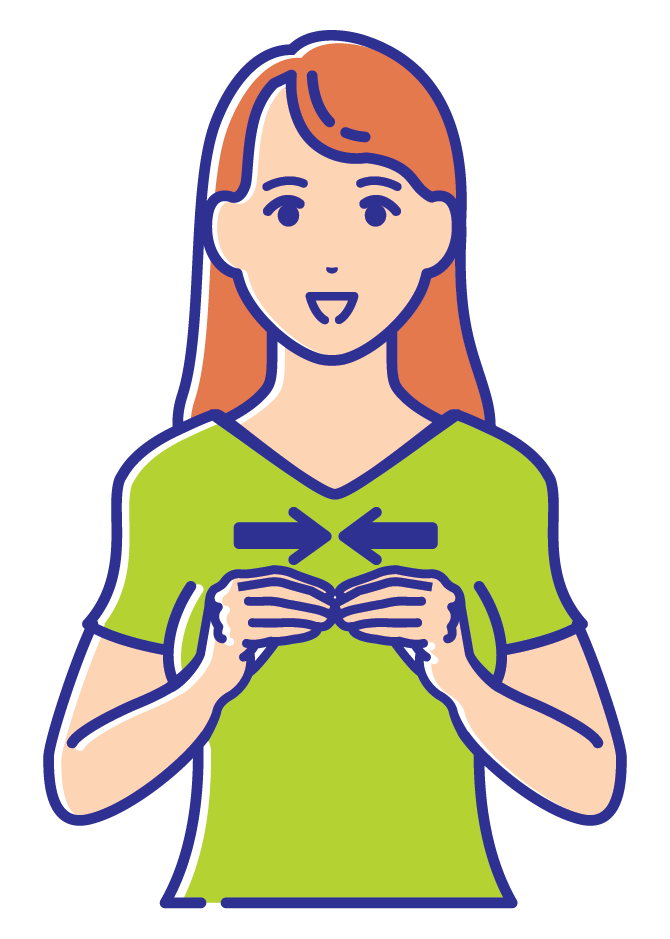
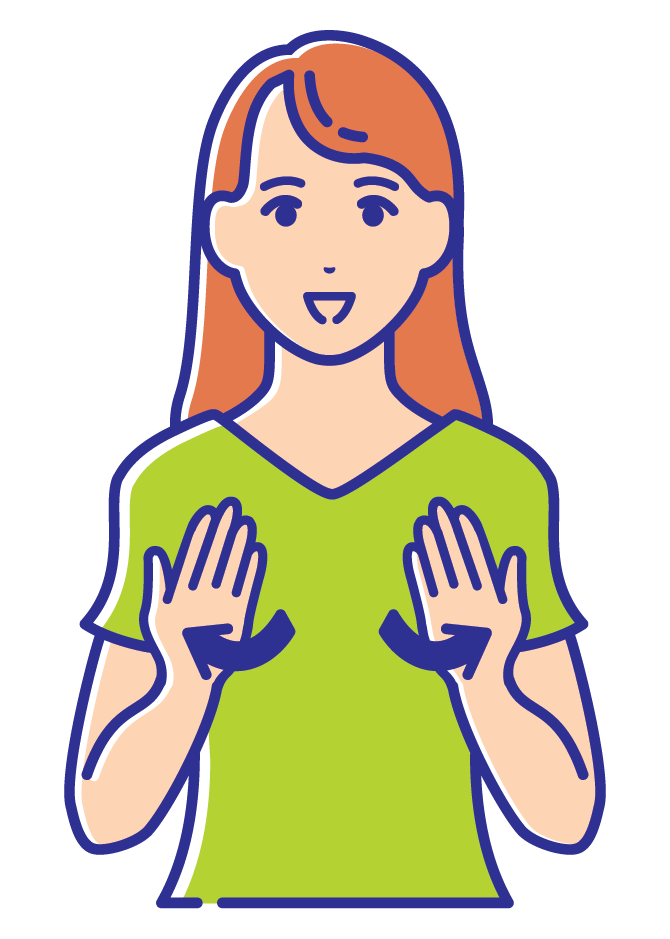
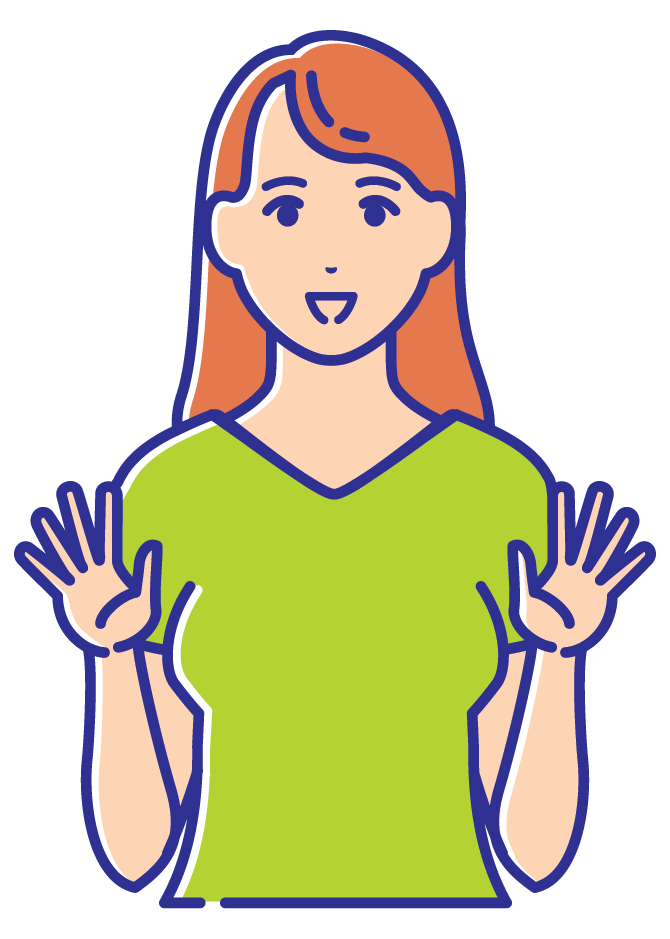
Teaching me language for words like “eat,” “more,” and “all done” makes it easier for me to communicate and express my emotions.

Eat-01
Eat-02

EAT

More-01
More-02

MORE

AllDone-01
AllDone-02

ALL DONE

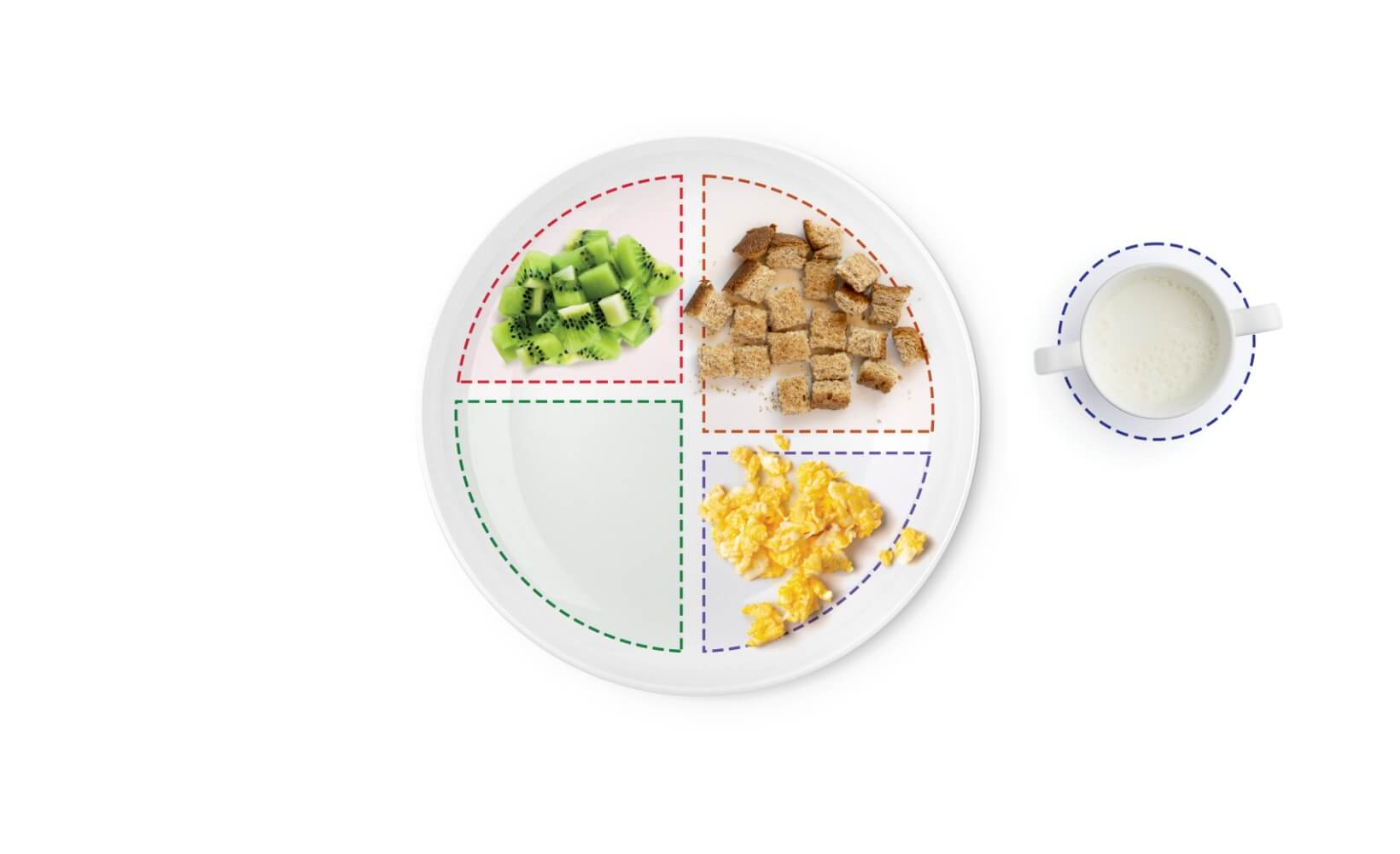
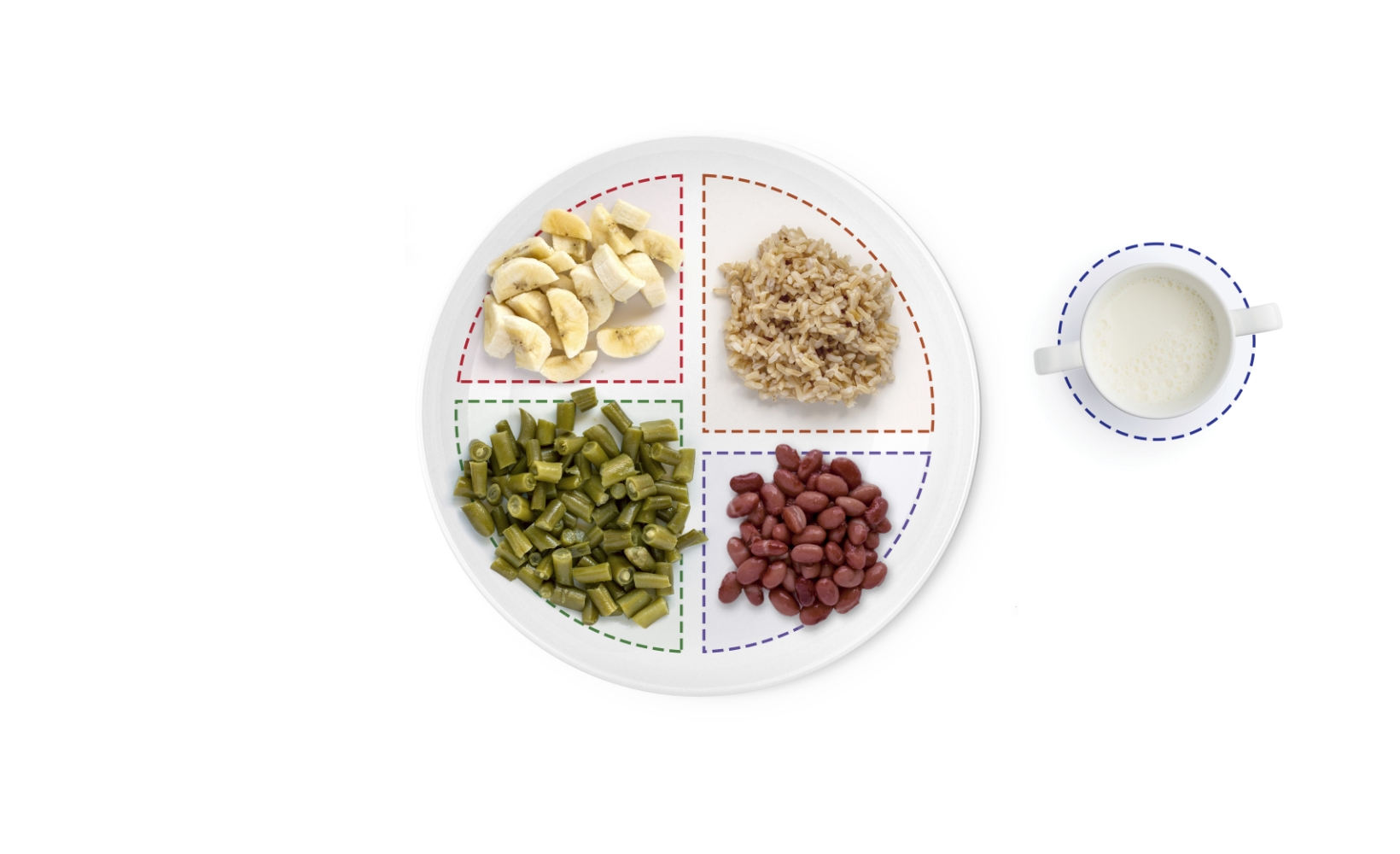
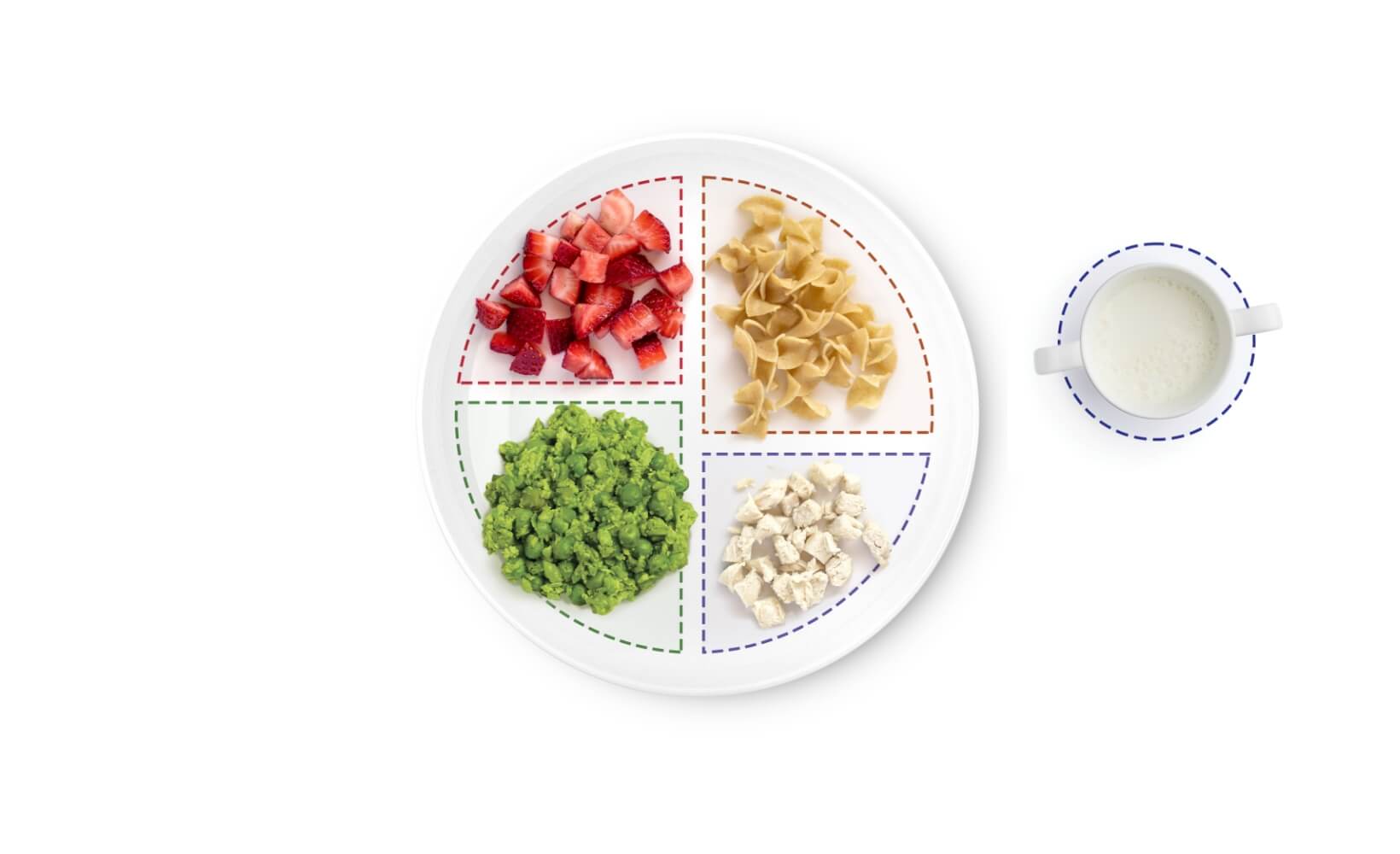
Here are some examples of what meal and snack portion sizes might look like on my plate.

BREAKFAST

¼ cup diced kiwi
breakfast
½ slice, cut up whole grain toast
½ cooked, cut up egg
½ cup breast milk or whole milk

Lunch

½ medium, sliced banana
½ cup cooked, chopped green beans
lunch
¼ cup cooked brown rice
½ cup breast milk or whole milk
¼ cup cooked kidney beans

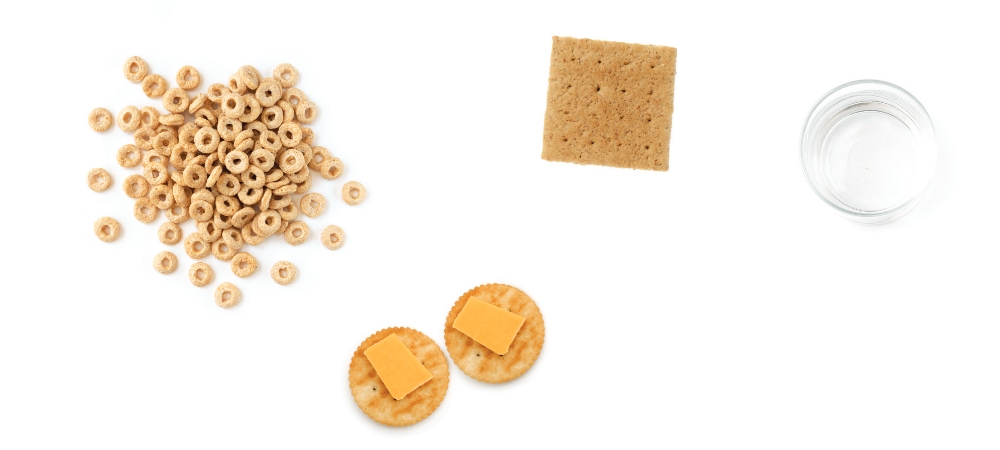
Snacks

snack
½ cup dry cereal
2 to 3 whole grain crackers with cheese
½ graham cracker
water between meals and snacks

Dinner

¼ cup diced strawberries
½ cup mashed peas
dinner
¼ cup cooked whole grain pasta
2 tablespoons baked, chopped chicken
½ cup breast milk or whole milk

Daily Suggested Food Group Amounts

FRUITS

2 servings a day
1 serving = ½ cup
(1 cup total)

Cooked or soft, raw fruit.

Mashed, sliced, or chopped.

Offer a variety: red, yellow, orange, blue, and green.

VEGETABLES

2 servings a day
1 serving = ½ cup
(1 cup total)

Cooked and mashed, sliced, or chopped veggies.

Offer a variety: dark green, orange, red, yellow, and purple.

GRAINS

6 servings a day
1 serving = ½ ounce
(3 ounces total)

Bite-sized pieces.

Whole grain bread, tortillas, rice, or noodles.

Dry or cooked cereal.

PROTEINS

2 servings a day
1 serving = 1 ounce
(2 ounces total)

Cooked, chopped meat, poultry, or fish.

1 egg.

¼ cup cooked, mashed beans or peas.

1 tablespoon of peanut butter.

DAIRY

4 servings a day
1 serving = ½ cup
(2 cups total)

Breast milk (at breast or expressed) or whole milk.

Yogurt.

1 inch cube or 2 tablespoons shredded cheese.

bac_Baby_eating

Look what I can do!

  • I can drink from a small, plastic cup at meals and snacks.
  • I am learning how to use a spoon.
  • I love learning how to walk with you.
  • I may know how to say some words. Please read, talk, and sing to me so I can learn more.

Keep me safe and healthy.

Please DON’T give me foods I could choke on like whole nuts, whole grapes, seeds, hot dogs, or hard candies. 

I need check-ups and shots to stay healthy. I should visit the doctor at 12 months, 15 months, and 18 months. 

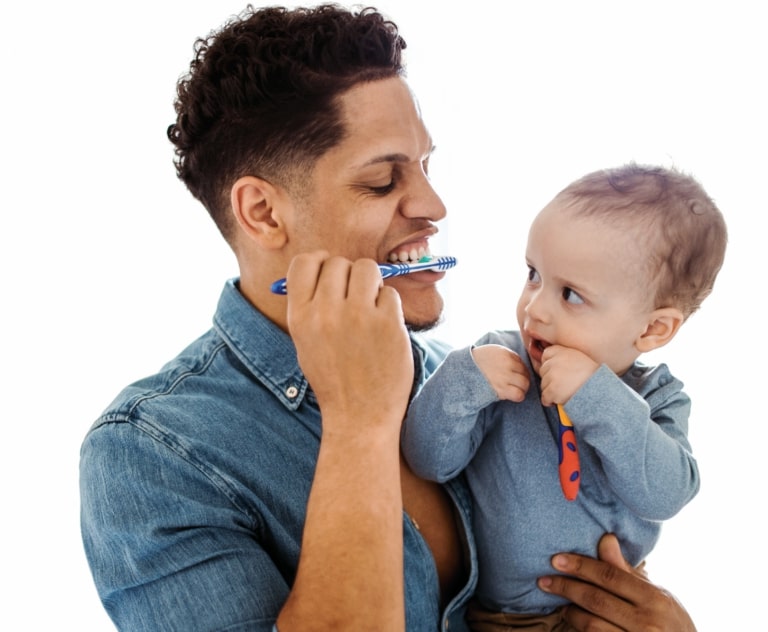
Brush my teeth twice a day with a small, soft toothbrush and water.

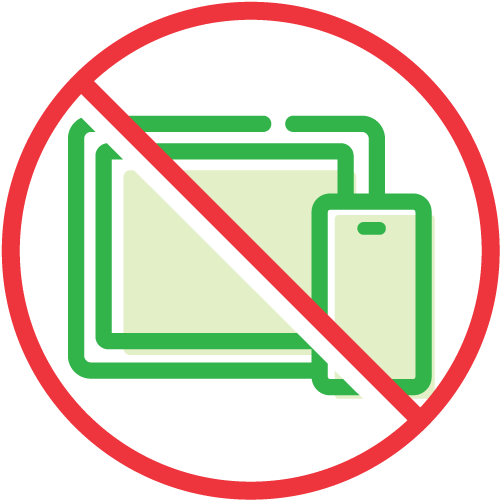
Screen Time

I learn best when I interact with the people around me. My pediatrician recommends zero screen time until I am at least 18 months old.

baby dad brush
West Virgina Footer logo

Contact Us

350 Capitol Street, Room 515
Charleston, WV 25301
304-558-0030
dhhr.wv.gov/wic

Learn More

  • How to Apply
  • Find a Clinic
  • Where can I shop?

Resources

  • West Virginia Medicaid
  • Nutrition and Breastfeeding Resources
  • West Virginia Division of Tobacco Prevention
  • West Virginia 211
  • Facebook
  • X twitter

This institution is an equal opportunity provider.

Cookie PolicyPrivacy Policy

© Brush Art Corporation

×
  • Email
  • SMS
If you are using multiple emails, separate them with commas.

    SMS Communication Consent

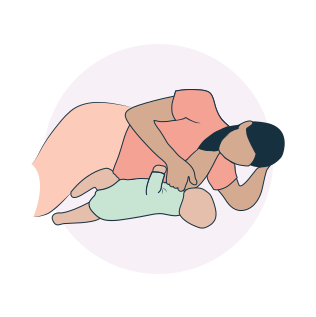
    Side-Lying Hold

    1. For the right breast, lie on your right side with your baby facing you.
    2. Pull your baby close. Your baby’s mouth should be level with your nipple.
    3. In this position, you can cradle your baby’s back with your left arm and support yourself with your right arm and/or pillows.
    4. Keep loose clothing and bedding away from your baby.
    5. Reverse for the left breast.

    This hold is useful when:

    • You had a C-section
    • You want to rest while baby feeds
    • You are breastfeeding in the middle of the night
    • You and your baby are comfortable in this position

    Cross-Cradle Hold

    1. For the right breast, use your left arm to hold your baby’s head at your right breast and baby’s body toward your left side. A pillow across your lap can help support your left arm.
    2. Gently place your left hand behind your baby’s ears and neck, with your thumb and index finger behind each ear and your palm between baby’s shoulder blades. Turn your baby’s body toward yours so your tummies are touching.
    3. Hold your breast as if you are squeezing a sandwich. To protect your back, avoid leaning down to your baby. Instead, bring your baby to you.
    4. As your baby’s mouth opens, push gently with your left palm on baby’s head to help them latch on. Make sure you keep your fingers out of the way.
    5. Reverse for the left breast.

    This hold is useful when:

    • Your baby is premature
    • Your baby has a weak suck
    • Your baby needs help to stay latched
    • Your baby needs extra head support
    • You and your baby are comfortable in this position

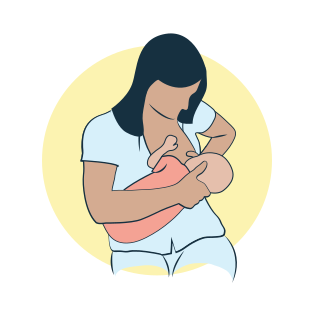
    Clutch or “Football” Hold

    1. For the right breast, hold your baby level, facing up, at your right side.
    2. Put your baby’s head near your right nipple and support their back and legs under your right arm.
    3. Hold the base of your baby’s head with your right palm. A pillow underneath your right arm can help support your baby’s weight.
    4. To protect your back, avoid leaning down to your baby. Bring baby to you instead.
    5. Reverse for the left breast.

    This hold is useful when:

    • You had a C-section
    • You have large breasts
    • You have flat or inverted nipples
    • You have a strong milk let-down
    • You are breastfeeding twins
    • Your baby likes to feed in an upright position
    • Your baby has reflux
    • You and your baby are comfortable in this position

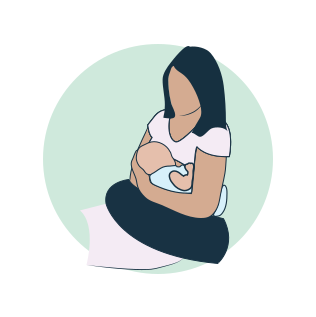
    Cradle Hold

    1. For the right breast, cradle your baby with your right arm. Your baby will be on their left side across your lap, facing you at nipple level.
    2. Your baby’s head will rest on your right forearm with your baby’s back along your inner arm and palm.
    3. Turn your baby’s tummy toward your tummy. Your left hand is free to support your breast, if needed. Pillows can help support your arm and elbow.
    4. To protect your back, avoid leaning down to your baby. Instead, bring your baby to you.
    5. Reverse for the left breast.

    This hold is useful when:

    • Your baby needs help latching on
    • You and your baby are comfortable in this position

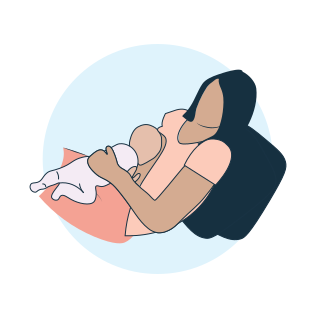
    Laid-Back Hold

    1. Lean back on a pillow with your baby’s tummy touching yours and their head at breast level. Some moms find that sitting up nearly straight works well. Others prefer to lean back and lie almost flat.
    2. You can place your baby’s cheek near your breast, or you may want to use one hand to hold your breast near your baby. It’s up to you and what you think feels best.
    3. Your baby will naturally find your nipple, latch, and begin to suckle.

    This hold is useful when:

    • Your baby is placed on your chest right after birth
    • You have a strong milk let-down
    • You have large breasts
    • You and your baby are comfortable in this position